
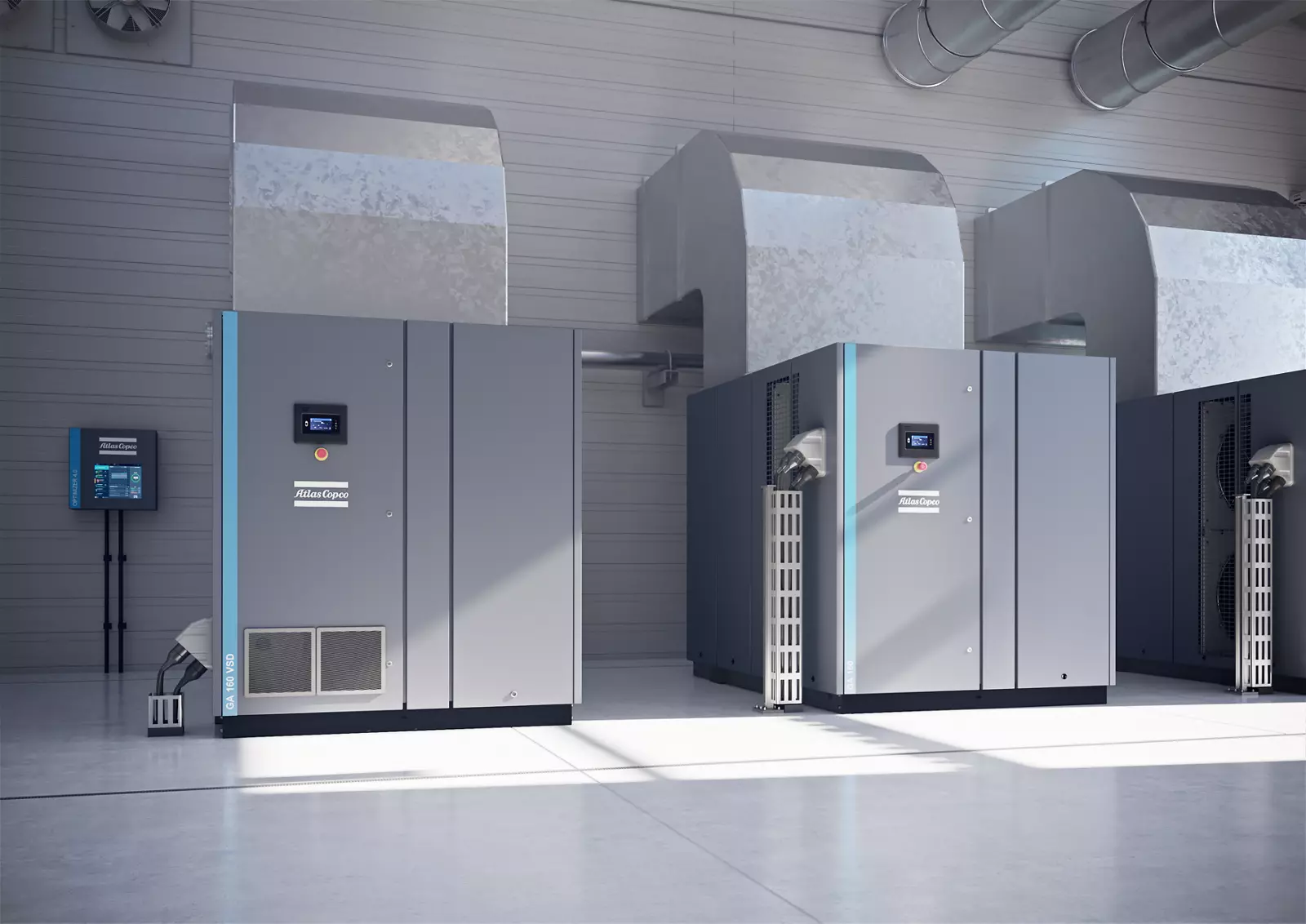
The Strategic Importance of Choosing the Right Receiver in Compressed Air Systems
Air receivers act as the system's "lungs", storing compressed air and easing the load on the compressor during sudden increases in demand. If a facility's air receiver is too small for its needs, the compressor motor will have to stop and start many times within seconds to maintain pressure. This both speeds up mechanical wear and inflates electricity bills.
The Logic of Air Storage: The System's Buffer Zone
The air receiver is a huge buffer zone that slows down the air leaving the compressor and absorbs pressure shocks. When a machine with high air consumption starts up on the production line, this sudden demand is first met from the reserve in the receiver. A receiver of sufficient size gives the system the time the compressor needs to notice this sudden change and switch to full load.
Receivers also provide a resting space where the air can give off its remaining heat and condensation can take place. The longer the air stays in the receiver, the more effective the cooling, and the more easily water droplets settle to the bottom by gravity. This natural filtration process significantly reduces the load on the air dryer and line filters.
Key Variables and Parameters Used in the Calculation
Before starting the sizing process, the following technical parameters must be clearly known:
- Compressor Capacity (Q): The compressor's air output per minute (usually expressed in m³/min or l/min).
- Pressure Differential (dP): The difference between the compressor's cut-out pressure (Pmax) and the minimum pressure needed for the system to work (Pmin).
- Number of Starts (t): The variable that determines the maximum number of times the compressor can start in an hour to protect motor life (the ideal range is 6–10 start-stops per hour).
- Atmospheric Pressure (P1): A standard part of the formula, usually taken as 1 bar at sea level.
The Air Receiver Volume Formula and Mathematical Analysis
The standard receiver volume formula most often used in engineering practice is as follows:
V = (Q * t * P1) / dP
Looking at the formula, you can see that compressor capacity (Q) is directly proportional to volume. However, because the dP (pressure differential) value is in the denominator, the required receiver volume increases sharply as the allowed pressure band narrows.
Step-by-Step Example Calculation
Let's work through a practical scenario:
Example Scenario:
– Compressor Capacity (Q): 5,000 l/min
– System Pressure Band: maximum 8 bar, minimum 7 bar (dP = 1 bar)
– Target Cycle (t): no more than 10 starts per hour (one cycle every 6 minutes)
When capacity and the time period are entered into the formula in the correct units, you get the minimum safe volume that can keep pressure above 7 bar even at the system's most demanding moment. This calculated value is then rounded up to the standard receiver sizes on the market (such as 1,000, 2,000 or 5,000 liters).
Effects on Energy Efficiency and Motor Health
An undersized receiver causes the compressor to keep switching between load and unload, creating serious electricity waste. Every time the compressor runs unloaded, the motor keeps turning even though it produces no air, consuming about 30% of its full-load current.
Electric motors draw several times their normal running current at start-up. If the receiver is too small and the motor starts 20–30 times an hour, the motor windings overheat and the risk of burnout increases. The right receiver size also makes components such as inlet valves and bearings wear more slowly, lowering maintenance costs.
Dryers, Filtration and Receiver Placement
Whether an air receiver is vertical or horizontal is strategically important for making efficient use of the space and managing condensate:
Vertical Air Receivers: Thanks to gravity, they are always better at letting condensed water collect at the bottom and be drained. They are the most popular model in factories because they save floor space. Horizontal Air Receivers: They are preferred where ceiling height is limited or in compact units. An automatic drain valve (autodrain) must always be fitted underneath to reduce the risk of internal corrosion.Thanks to the receiver's balancing effect, air flows through the filters in a more even, lower-speed way. This stability improves the filters' ability to trap oil and particles in the air, raising the quality of the air going to the production line.
Yıldırım Soğutma: Maximum Efficiency and Proper Design for Compressor Systems
Correct receiver sizing is the most fundamental step in taking your compressed air system's performance to the top, keeping energy costs under control and extending equipment life. With its expert engineering team, Yıldırım Soğutma analyzes your facility's real-time air consumption data and operating characteristics and carefully prepares the receiver volume and layout that best suit your needs. We are by your side at every stage to safeguard your uninterrupted production line.