
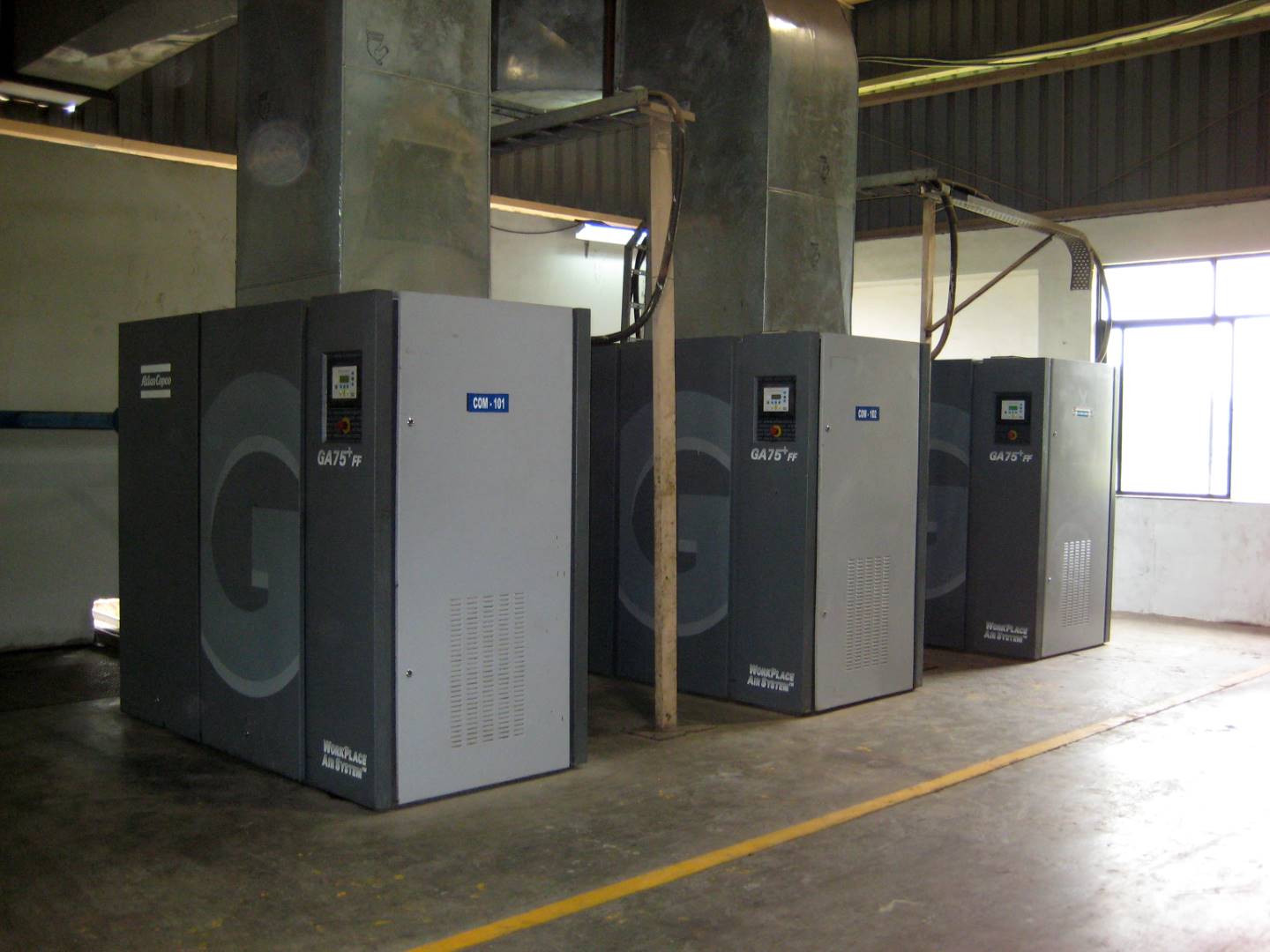
Buying a used compressor can be an advantage for businesses that want to reduce their investment costs. However, looking only at the price, the external appearance or whether the unit runs is not enough when making a decision. Running hours, maintenance history, the motor, the screw element, air flow and energy consumption must all be assessed together. These checks reduce the high maintenance and energy costs that can arise after the purchase.
Does Buying a Used Compressor Make Sense?
A used compressor whose technical condition has been verified and whose capacity suits the business's needs can be a sensible way to reduce the initial investment. On the other hand, the low price of a unit with an unknown history, one that has not been maintained for a long time or one with more capacity than needed can be misleading. The purchasing decision should take into account future energy, maintenance, parts and potential breakdown costs as well as the unit's current condition.
The cost difference between new and used compressors
The main advantage of used units is that they can offer a lower purchase cost than a new compressor. This difference can make a used unit a sensible choice, especially for businesses with a limited budget, those producing for a short period or those that only need a standby compressor. However, this advantage only applies if the unit's technical condition and suitability for the intended use are right.
To understand whether a used compressor is really economical, you should not look at the sale price alone. If the oil, filters, separator, belts or other service parts need to be replaced before the first start-up, these costs must be added to the purchase price. The total cost emerges once transport, installation, commissioning, possible overhauls and the first maintenance are also taken into account. A used compressor is therefore an advantage not because its purchase price is low, but because its technical condition has been verified, it suits the need and its total operating cost is acceptable.
Service life and total cost of ownership
The real cost of a compressor to a business does not arise only on the day it is bought. Electricity consumption, regular compressor maintenance, consumables, service costs and the cost of production downtime continue for as long as the unit is used. Because energy is one of the biggest items in the life cycle cost of compressed air equipment, differences in efficiency can become more important than differences in purchase price over long-term use.
When comparing two used compressors, you should therefore look not only at which is cheaper, but also at how much power each consumes to deliver the required flow. A unit that is more expensive but in good condition and efficient can be more economical in the long run than a cheaper but inefficient option.
8 Points to Check When Buying a Used Compressor
Before buying, look not only at whether the compressor runs but also at its general technical condition. Key points such as running hours, maintenance history, the motor, the screw element, air flow and operating temperature should be checked. If possible, the test should be carried out with the unit under load and at normal working pressure.
Running hours and history of the compressor
Running hours are an important starting point for understanding how heavily the unit has been used, but they do not show its remaining life on their own. Of two compressors with the same running hours, one may have worked in a clean, regularly maintained environment while the other ran in high temperatures and heavy dust. The counter reading should therefore be assessed together with the service records.
You should also find out where and for what purpose the unit was used before. A machine that ran intermittently on a single shift and one that ran continuously under load on three shifts reach the same running hours in very different ways. If the control panel shows loaded hours and total running hours separately, both values should be examined.
Condition of the motor and screw element
In screw compressors, the screw element and the main motor are among the most expensive components. If the unit struggles, makes irregular noise, vibrates excessively or runs at an abnormal temperature during start-up, it should be given a detailed technical inspection. You can also check whether the motor currents are balanced across the phases.
Inspecting the screw element from the outside alone may not be enough. Oil leaks, bearing noise, previous overhaul information and service records should be assessed. If a major overhaul has been carried out, which parts were replaced, when and by whom should be verified with records.
Checking the oil, oil filter and air filter
On oil-injected screw models, the oil level, appearance and maintenance timing should be checked. A very low oil level, the wrong oil or an overdue service can affect the operating temperature and the condition of internal parts. Heavy deposits or obvious contamination around the oil require a detailed review of the maintenance history.
The condition of the air and oil filters also tells you how the unit has been used. Very dirty filters can indicate that maintenance intervals were delayed or that the compressor worked in a dusty environment. The cost of the consumables needed for the first compressor maintenance after purchase should be included when evaluating the offer.
Pressure and air flow performance
The kW and bar values on the nameplate do not guarantee that the compressor can actually deliver the required amount of air in its current condition. During the test, the time it takes the unit to reach the target pressure, pressure stability under load and, if possible, the actual air flow should be measured. If manufacturer data is available, the measured results can be compared with the catalog performance.
Measuring power consumption together with flow gives a more meaningful assessment. To compare compressor efficiency, the amount of air produced at a given pressure and the electrical power drawn should be considered together; the industry uses performance indicators such as specific power for this comparison.
Cooling system and operating temperature
Temperature values should be monitored while the compressor runs under load. Dirty coolers, poor fan performance, lubrication problems or insufficient air flow can cause the unit to run hotter than normal. You should also check whether the control panel shows past high-temperature alarms.
If there is heavy contamination on the cooler surfaces, damage to the fans or blockages in the air ducts, don't think only of the cleaning cost. For a used air compressor that has run at high temperatures for a long time, the condition of the oil, seals, bearings and other components should be assessed in more detail.
Electrical panel and control unit
Check the electrical panel for burn marks, loose connections, improper wiring added later or signs of overheating. Contactors, fuses, drives and motor connections should match the unit's wiring diagram. On variable speed models, the error history and operating condition of the frequency drive should also be examined.
Active and past alarms on the control display can tell you about problems the unit has had recently. Sensor errors, high-temperature warnings or recurring motor faults that have simply been reset do not mean the problem has been fixed. Comparing the alarm history with the maintenance records gives a more reliable result.
Checking for leaks, vibration and abnormal noise
Look for oil leaks at hose connections, oil lines, around the separator tank and on seal surfaces. Compressed air leaks should be checked at connections, valves and the pneumatic lines inside the equipment. Abnormal vibration while the unit is running can point to problems with connections, bearings or rotating equipment.
Noise checks should also be done while the unit is running. Symptoms such as bearing hum, metallic friction, knocking or irregular vibration should not be accepted as normal until their source has been identified. If possible, take vibration measurements to get measurable data instead of a subjective assessment.
Maintenance and service history
A used compressor with regular service records can be assessed more reliably than a unit with an unknown history. Examine which compressor maintenance work was done and when, when the oil and filters were changed, whether major parts have been overhauled and what faults the unit has had in the past.
A lack of maintenance records does not necessarily mean the unit is in bad condition, but it increases uncertainty. In that case, the pre-purchase technical inspection should be more detailed, and the first maintenance, possible part replacements and the chance of unexpected repairs should be included in the budget.
Do the Compressor's Technical Specifications Suit Your Needs?
When choosing a compressor, motor power, working pressure and air flow must be assessed together, taking into account not only current consumption but also shift changes, machines running at the same time and future capacity plans. Choosing a used compressor that is too large or too small can cause problems for both production performance and energy consumption.
Comparing kW, bar and air flow values
The kW value indicates the motor's power class, the bar value the compressor's working pressure, and air flow the amount of air it can deliver under given conditions. Two compressors with the same motor power may not have the same flow or energy performance. Choosing simply by asking "how many kW?" is therefore not enough.
The comparison should be made at the same or a similar working pressure. As pressure rises, the compressor's energy demand increases while the usable amount of air it delivers can change. CAGI also states that compressor performance should be assessed by looking at capacity, working pressure and power consumption together.
Determining the business's actual compressed air needs
First, the air consumption of all pneumatic equipment running at the same time in production should be determined. The minimum pressure required at critical points of use, demand that varies by shift and short peaks in consumption should also be assessed. If flow can be measured in the existing facility, sizing capacity from the actual consumption profile gives more accurate results.
If there is high pressure loss in the system, compensating with a larger compressor is not the right approach. Pressure drops in the pipework, filters, dryer and other equipment should be investigated first. An unnecessarily high working pressure also increases the compressor's energy consumption.
Why Is Energy Efficiency Important in a Used Compressor?
Because compressors consume electricity over long running hours, small differences in efficiency can have significant effects on annual operating costs. When choosing a used air compressor, you should therefore look not only at the unit's rated motor power but also at how much energy it needs to deliver the required pressure and flow. Especially in businesses that run shifts or operate continuously, the savings from the purchase price can be lost over time through high electricity consumption.
Energy consumption in older compressors
A compressor should not automatically be considered inefficient just because of its age. Energy performance is affected by the design, the control system, the condition of the motor and screw element, the filters, cooling performance, working pressure and how well the unit fits the actual air demand.
That said, a unit that has been used for a long time and whose maintenance has been delayed may no longer deliver the performance stated in the catalog when it was new. Before buying, current performance should be determined by measuring input power and actual air flow if possible. This allows the decision to be based on measured data rather than estimates based on the unit's age.
Calculating total operating cost instead of purchase price
The total cost calculation should add annual electricity consumption, compressor maintenance, consumables, planned overhauls and the impact of possible production stoppages to the purchase price. When calculating the energy cost, you can use the power the unit actually draws, its annual running hours and the business's electricity unit price. CAGI points out that over a long service life, energy costs can reach several times the purchase price of a compressor.
For example, if a cheaper unit will run thousands of hours a year, poor energy efficiency can wipe out its initial price advantage within a few years. When choosing a used compressor, you should therefore answer not only "how cheap is it?" but also "how many kWh will it consume a year, and what maintenance costs will it create in the coming years?"
Professional Support from Yıldırım Soğutma When Choosing a Used Compressor
Yıldırım Soğutma supports used compressor selection from assessing the unit's technical condition to determining the capacity that suits the business's air needs. By considering the operating conditions of the existing equipment, its service needs and the process it will be used in, it helps assess more accurately the maintenance and performance requirements that may arise after the purchase.
Assessing the compressor's technical condition
Yıldırım Soğutma provides technical support for assessing the operating condition, main components and service needs of used compressors. Inspecting the unit's current condition before purchase helps identify the necessary maintenance and possible parts needs earlier.
Maintenance, service and choosing the right capacity
Yıldırım Soğutma offers support with compressor maintenance, technical service and determining the capacity that suits the business's compressed air needs. Before investing in a used compressor, you can contact Yıldırım Soğutma for a technical assessment and information on solutions that suit your needs.
Frequently Asked Questions
What is the most important check when buying a used compressor?
Running hours, maintenance history, the condition of the motor and screw element, measured air flow, operating temperature and energy consumption should be assessed together. In particular, testing the unit under load gives far more information than just checking whether it runs.
How many running hours should a used compressor have?
There is no safe running-hours limit that applies to all compressors. The machine's model, operating conditions, time spent under load, compressor maintenance history and previous overhauls directly affect its remaining service potential. Low running hours alone should therefore not be used as a purchasing criterion.
Is it worth buying a used screw compressor?
Yes, a screw compressor whose technical condition has been verified and whose capacity suits the business's needs can be bought. The screw element, motor, separator system, oil circuit, cooling system, control unit and service history should be examined in detail before purchase.
How do you check a compressor's maintenance history?
You can examine service invoices, maintenance forms, records of replaced parts and the service or alarm history in the control unit. The dates in the records should be compared with the unit's running hours. If a major overhaul has been carried out, the date of the work and the parts replaced should also be verified.
Why is service support important when buying a used compressor?
With used units, the wear on existing parts and past operating conditions may not always be fully known. Technical service support is important for the pre-purchase assessment, the first maintenance, choosing the right consumables and responding to faults that may occur later.
Is a used or a new compressor more advantageous?
This decision should be based on the expected period of use, budget, energy consumption, capacity needs and the unit's technical condition. A used air compressor in good condition can offer a low initial cost, while for intensive, long-term use the energy, maintenance and warranty advantages of new, more efficient equipment may work out better in terms of total cost.