
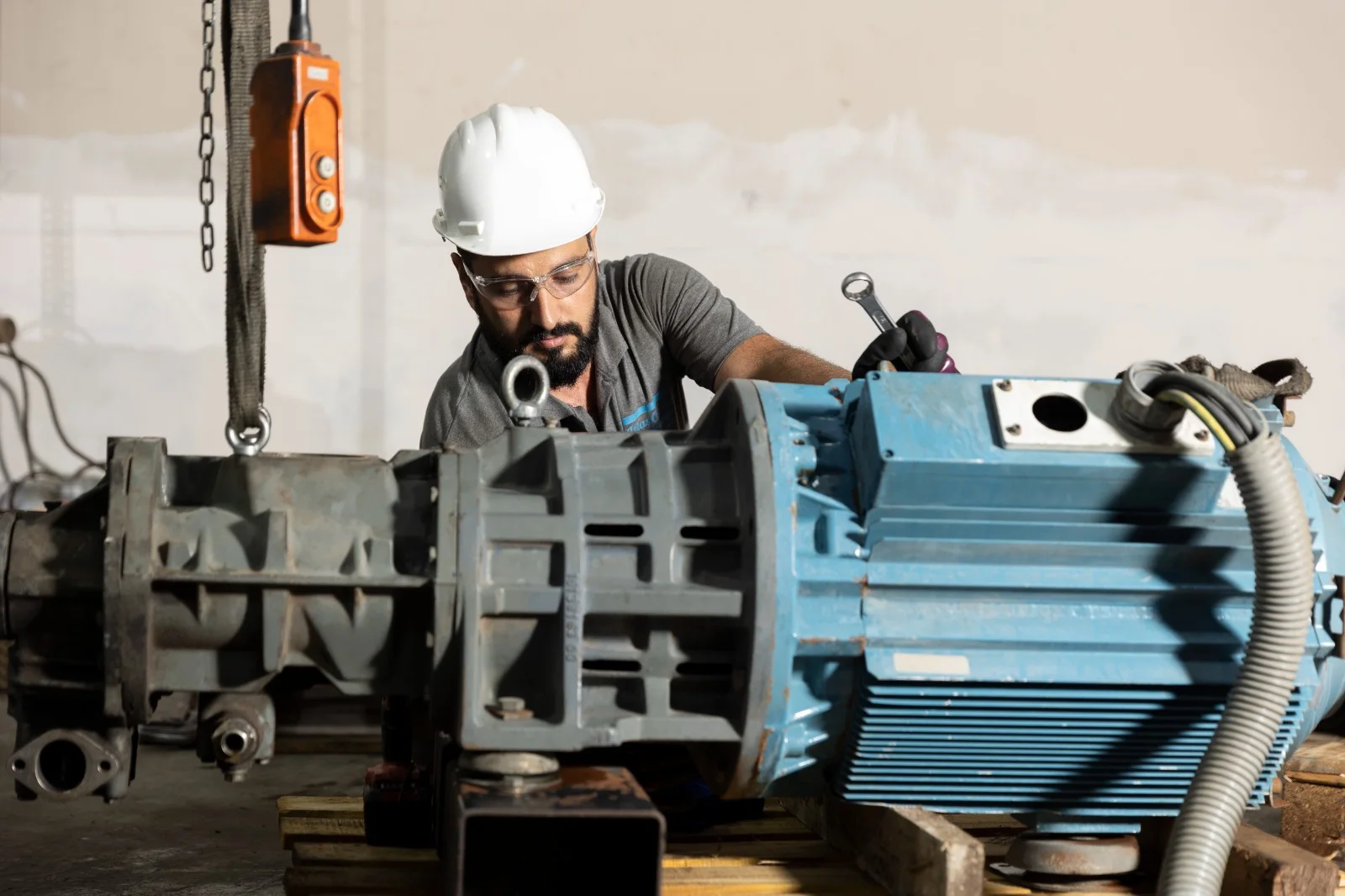
Why Should Compressor Maintenance Be Done Regularly?
Regular compressor maintenance covers not only replacing parts but also monitoring the system's operating conditions. When indicators such as pressure, temperature, oil level, filter condition, air leaks, vibration and cooling performance are tracked, small deviations can be noticed before they grow. Manufacturers also recommend that maintenance plans be built around the unit and site conditions, with service intervals adapted to the conditions of use.
Effect on Compressor Performance
A compressor's ability to deliver the required flow and pressure consistently depends on many components working properly, from air intake to cooling. A dirty air filter can increase intake resistance, clogged coolers can raise the operating temperature, and leaks can make the system run longer to reach the target pressure.
Regular checks make it possible to treat these changes not just as fault symptoms but as early signs of performance loss. During maintenance, you should therefore look not only at the consumables that need replacing but also at operating data such as load/unload behavior, discharge pressure, temperature values, noise, vibration and alarm history.
Effect on Energy Consumption and Operating Costs
Producing compressed air is an energy-intensive process, and small inefficiencies in the system can increase total electricity consumption. Dirty filters, inadequate cooling, pressure losses and air leaks can make the compressor run longer to meet the same demand. This causes the compressor to use more energy and raises operating costs.
The effect of compressor maintenance on energy consumption is not limited to filter or oil changes. Keeping the cooling system clean, fixing air leaks, maintaining appropriate pressure values and replacing filters on time are also important for efficient operation. These checks help prevent the compressor from starting unnecessarily and from running longer to meet the same air demand.
Assessing maintenance costs only by the price of the filters or oil replaced is therefore incomplete. When electricity consumption, unplanned downtime, production losses and the risk of major breakdowns are considered together, regular maintenance makes total operating costs more predictable.
How Often Should a Compressor Be Serviced?
Service timing is determined by the compressor type, model, annual running time, load ratio, ambient temperature, dust level and the manufacturer's recommendations. In some systems an annual service can be the basic reference, while in heavily used machines the running-hours limit may be reached before the calendar interval.
Daily and Weekly Maintenance Checks
Daily checks should cover the oil level, working pressure, temperature, warnings on the control panel, unusual noise or vibration, and visible oil or air leaks. In systems with manual drains, draining condensate from the air receiver and moisture traps is also part of the daily routine.
Weekly checks can review the contamination of air inlets, filter surfaces and cooling areas in more detail. On belt-driven models, belt tension and alignment, loosening at connection points and signs of leaks in hoses and pipes should be checked.
Monthly and Periodic Maintenance Tasks
Monthly checks are an intermediate checkpoint where daily observations become more systematic. It is useful to clean cooler surfaces, check the condition of the filters and electrical connections, make sure the condensate drain system works, check the integrity of hoses and connections and compare operating parameters with previous months. According to the service steps set by the manufacturer, the oil, oil filter, air filter, separator, belts, seals or other consumables are checked or replaced at specific running hours.
Maintenance Plan Based on Running Hours
For compressors, running hours are as important as the calendar. For example, a unit that runs only a few hundred hours a year and a screw compressor running all year round in shift production should not follow the same service schedule. Some manufacturers define service steps at 2,000, 4,000 or other hour intervals for certain models, but because these values vary by model, the unit's user manual should be followed.
In practice, the maintenance plan can follow a "whichever comes first, calendar time or running hours" approach. When the counter reading, the last service date, the parts replaced and the next maintenance threshold are kept in the same record for periodic compressor maintenance, the risk of missing a service is reduced.
What Is Done During Compressor Maintenance?
The scope of a standard service varies with the compressor technology; oil-injected screw, oil-free screw, piston and portable compressors do not share the same parts list. That said, maintenance systematically checks the lubrication system, air intake, filtration, separator, cooling system, drain lines, belts or coupling, electrical connections and general operating parameters.
Checking the Oil and Oil Filter
In oil-injected compressors, the oil performs critical tasks: lubricating the bearings and moving parts, supporting sealing and removing heat. The oil level should be assessed not only for whether it is low, but also in terms of service time and operating conditions. Unsuitable oil, the wrong viscosity or oil that has exceeded its service life can affect the system's operating reliability.
The oil filter limits the contaminants in the oil circuit that can reach sensitive components. Replacement should not be based on appearance alone; the service interval defined by the manufacturer should be followed. Using oil and filters that match the unit's specification during maintenance is particularly important for warranty, performance and equipment life.
Checking the Air Filter and Separator
The air filter traps dust and particles in the air entering the compressor. As the filter gets dirty, intake resistance can increase and the compressor's air output can be affected. In very dusty, fibrous or dirty environments, checks should be more frequent than in standard factory environments; some user manuals explicitly recommend more frequent filter changes in dusty conditions.
In oil-injected screw compressors, the separator separates oil from the compressed air. Because a high pressure differential across the separator can affect air flow and energy consumption, the differential pressure or related service indicators should be monitored during maintenance. When parts need replacing, products that meet the specifications defined for the unit should be used.
Checking the Cooling System and Fan
A compressor generates a significant amount of heat while running, and this heat must be removed safely. Contamination of the air or oil coolers, reduced fan performance or obstructed air flow can raise the operating temperature. Cooler surfaces, fans, air inlets and outlets and ventilation of the compressor room should therefore be assessed together.
High ambient temperatures, especially in summer, can make existing cooling problems more visible in poorly ventilated compressor rooms. As part of maintenance, rather than just cleaning the fan inside the unit, you should also check that hot air is properly exhausted from the room.
What Happens If Compressor Maintenance Is Neglected?
When maintenance is delayed, the first result is not always a sudden breakdown; often, adverse changes in energy consumption, temperature, pressure stability or running time appear first. When compressor maintenance is neglected for a long time, these small deviations can combine with problems such as clogged filters, oil degradation, inadequate cooling and wear, turning into more expensive repairs and unplanned production stoppages.
Loss of Performance and Pressure
Clogged filters, air leaks or contaminated separators can make it harder for the system to deliver the required pressure and flow. Unnecessarily raising the compressor's set pressure to compensate for the pressure drop does not solve the real cause; on the contrary, it can increase energy consumption.
When pressure fluctuations are seen, you should not focus on the compressor unit alone. The dryer, line filters, air receiver, pipe diameters, valve positions and leaks in the distribution line should also be checked. This makes it possible to correctly separate whether the problem comes from the compressor or from another point in the compressed air system.
Overheating and Risk of Breakdown
Overheating can have various causes, such as dirty coolers, a low or unsuitable oil level, fan failure, inadequate room ventilation or high ambient temperature. If repeated high-temperature warnings appear on the control unit, the cause should be investigated rather than resetting the alarm and continuing to run the system.
Regular maintenance makes it easier to spot changes in the temperature trend early. In particular, a discharge temperature that keeps rising under normal operating conditions can point to a change in cooling capacity or the lubrication system that needs to be investigated.
Shorter Compressor Life
In a system whose maintenance is overdue, the bearings, valves, compressor element, motor and drive components can operate under harsher conditions than normal. Even if failing to replace a single consumable on time does not directly cause a major breakdown, it can increase the load on other parts through temperature, friction or pressure differential.
The purpose of maintenance is therefore not only to fix the current fault but also to preserve the operating conditions the equipment was designed for as far as possible. Regular service records also help to see which components wear faster than expected and to investigate the root cause of recurring problems.
What to Watch Out for During Compressor Maintenance
Doing maintenance the right way is as important as doing it at the right time. The compressor should be stopped, safely isolated from the electrical supply, the outlet valve closed and the system pressure relieved according to the manufacturer's procedure. The oil, filters and other parts to be used should be checked against the unit's technical specifications, and operating values should be checked after maintenance.
Following the Manufacturer's Maintenance Instructions
Each compressor model may have different service intervals and maintenance scope. General advice found online, such as "change the oil every 6 months" or "one service a year is enough", should therefore not be assumed to apply to every machine. The user manual, service schedule and maintenance warnings on the control panel should be assessed together.
In businesses with heavy duty, high temperatures, high humidity or heavy dust, the standard service interval may need to be shortened. When preparing an effective periodic compressor maintenance plan, actual site conditions, operating intensity and the unit's load profile should be taken into account alongside the manufacturer's maintenance program.
Keeping Maintenance Records Up to Date
Maintenance records should include both the date and the running hours. Recording the oil and parts replaced, the product codes used, the condition of the filters and separator, operating temperature, pressure values, any alarm history and the adjustments made makes comparisons easier at later services.
These records show whether the same fault keeps recurring and whether certain parts wear out before the expected time. Clearly stating the next check and service threshold after compressor maintenance turns maintenance from a reminder process that depends on individuals into a traceable operating procedure.
Compressor Maintenance and Service with Yıldırım Soğutma
Compressor maintenance should be planned taking into account the system's operating conditions and the service intervals set by the manufacturer. Yıldırım Soğutma provides technical service support for carrying out the necessary checks, identifying the parts needed and assessing system performance during compressor maintenance and service.
Professional Periodic Maintenance
Yıldırım Soğutma plans periodic compressor maintenance according to the unit's model, running hours and conditions of use. The oil, filters, separator, cooling system and other critical components are checked, with the aim of detecting potential problems before they grow and supporting uninterrupted compressor operation.
Genuine Spare Parts and Technical Support
Parts used during maintenance must be compatible with the compressor's technical specifications for the system to run reliably. Yıldırım Soğutma provides genuine spare parts and technical service support for Atlas Copco compressors, helping maintenance, part replacement and fault repair to be carried out with the right equipment.
Contact Yıldırım Soğutma for reliable maintenance, genuine spare parts and fast technical service support for your compressor.
Frequently Asked Questions
How often should a compressor be serviced?
A fixed monthly interval is not right for all compressors. In many systems an annual service can be one of the basic references, but units that reach high running hours may need maintenance sooner. Whichever of the manufacturer's calendar time or running hours criteria is reached first should be taken as the threshold.
When should a screw compressor be serviced?
For screw compressors, daily and weekly checks should be carried out continuously, while service work should be planned according to the running hours specified by the manufacturer. On oil-injected screw models, the service intervals of components such as the oil, oil filter, air filter and separator vary by model, so the schedule in the user manual should be followed.
When should compressor oil be changed?
The oil change interval varies with the type of oil used, the compressor model, operating temperature and operating conditions. Although some general guides give examples of six-monthly changes, this interval should not be assumed to apply to every unit. The hour or time limit specified by the manufacturer should be followed.
Which parts are replaced during compressor maintenance?
Depending on the level of maintenance, the air filter, oil filter, separator, compressor oil, belts, seals or other consumables in the service kit can be replaced. Not all parts need to be replaced at every service; the replacement list should be determined by the unit's model, running hours and the manufacturer's service plan.
What happens if compressor maintenance is not done?
Without maintenance, clogged filters, high operating temperatures, loss of pressure and flow, increased energy consumption and part wear can occur. As problems progress, unplanned downtime and higher repair costs can result. Regular compressor maintenance is necessary to detect the early signs of these risks and to keep the system within the operating conditions intended by the manufacturer.