Why Should Chiller Maintenance Be Done Regularly?
Industrial systems are subject to wear and fouling under intensive operation throughout the year. Regular chiller maintenance prevents system components from fatiguing and minimizes the risk of sudden mechanical failure. In units whose maintenance is neglected, serious problems such as compressor strain and heat transfer losses arise. This affects not only the health of the unit but also the efficiency of the entire production line.
Regular interventions keep energy consumption under control and deliver noticeable savings in operating costs. Checks carried out by a professional chiller service prevent small issues from turning into major, expensive repairs. In addition, legal regulations and occupational safety standards require cooling systems to be overhauled periodically. A well-maintained system means long-term peace of mind and profitability for the business.
When Should Chiller Maintenance Be Done?
The ideal intervals for cooling systems vary with the unit's running hours and the environmental conditions it operates in. As a general rule, a comprehensive technical inspection at least twice a year is recommended, but in facilities with intensive production the chiller maintenance schedule should be more frequent, for example every three months. Because seasonal transitions are periods when the system's load changes, this timing is strategically important.
Preparations made before summer in particular allow the system to perform well in extreme heat. Checks made before winter are necessary to prepare for the risk of freezing and low-load operation. Contacting expert teams as the ideal chiller maintenance time approaches prevents the system from going down unexpectedly. The fault logs and performance data on the unit also give important clues that maintenance is due.
When your system's running hours exceed 2,000, certain components may need overhauling. Tracking these thresholds is the cornerstone of a preventive maintenance strategy. Early intervention prevents system components from being damaged before they reach the end of their natural life. Sticking to the agreed schedule is an integral part of professional facility management.
Daily, Monthly and Seasonal Chiller Checks
Daily checks usually involve monitoring the system's operating pressures and temperatures. Operators should regularly note the warnings on the unit's panel and the water inlet and outlet temperatures. Any abnormal noise or vibration can be a warning of a problem that requires deeper investigation. These simple observations provide the basic data for a comprehensive chiller maintenance checklist.
Monthly checks focus on water levels, filter cleanliness and general sealing. Cleaning dust and dirt that build up on condenser surfaces is one of the most critical tasks at this stage. Any layer that blocks heat transfer makes the unit use more electricity. Monthly routines are checkpoints that keep the system stable.
Seasonal maintenance covers much more in-depth technical details and part replacements. During this process, oil quality is tested, the chemical condition of the refrigerant is checked and all mechanical connections are tightened. A well-prepared chiller maintenance checklist ensures that technical staff go through the system from start to finish without missing any detail. Seasonal overhauls get the unit fully ready for the next demanding period.
What to Watch for When Checking the Compressor, Fans and Evaporator
Because the compressor is the heart of the cooling system, it deserves the most attention during maintenance. The compressor's oil level and oil color provide vital information about wear in the internal components. The current (amps) the compressor draws also provides data on the condition of the motor windings. If any unbalanced operation is noticed, a technical analysis should be carried out without delay.
Fans and evaporator units are critical points where air or water exchanges heat. Cleaning the fan blades and lubricating the motor bearings are essential for uninterrupted air flow. Scaling or deposits in the evaporator passages directly reduce cooling capacity. The efficiency of these components is the main factor determining the system's overall coefficient of performance (COP).
How Are Gas Pressure and Refrigerant Level Checked?
The amount of refrigerant in the system must be exactly right for efficient evaporation and condensation. A low refrigerant charge leads to compressor overheating and low-pressure faults, while too much refrigerant creates a risk of high pressure. Gas pressure checks are carried out precisely using professional gauges and digital measuring instruments. For the system to run in balance, these pressure values must be within the manufacturer's standard range.
Leak checking is an integral part of gas pressure management. Connection points, valves and welds are scanned with electronic leak detectors to see whether there are any leaks. Even a small refrigerant leak can reduce the system's efficiency over time and cause serious energy losses. Leaks found should be repaired immediately and the lost refrigerant added back to the system using the correct methods.
The moisture content of the refrigerant is another important parameter to check. Moisture in the system can lead to acid formation and therefore to burnout of the compressor windings. If a color change is noticed when checking through the sight glass, the filter driers should be replaced. This delicate balance protects the system's mechanical health for many years.
Why Are Electrical Panel and Sensor Checks Important?
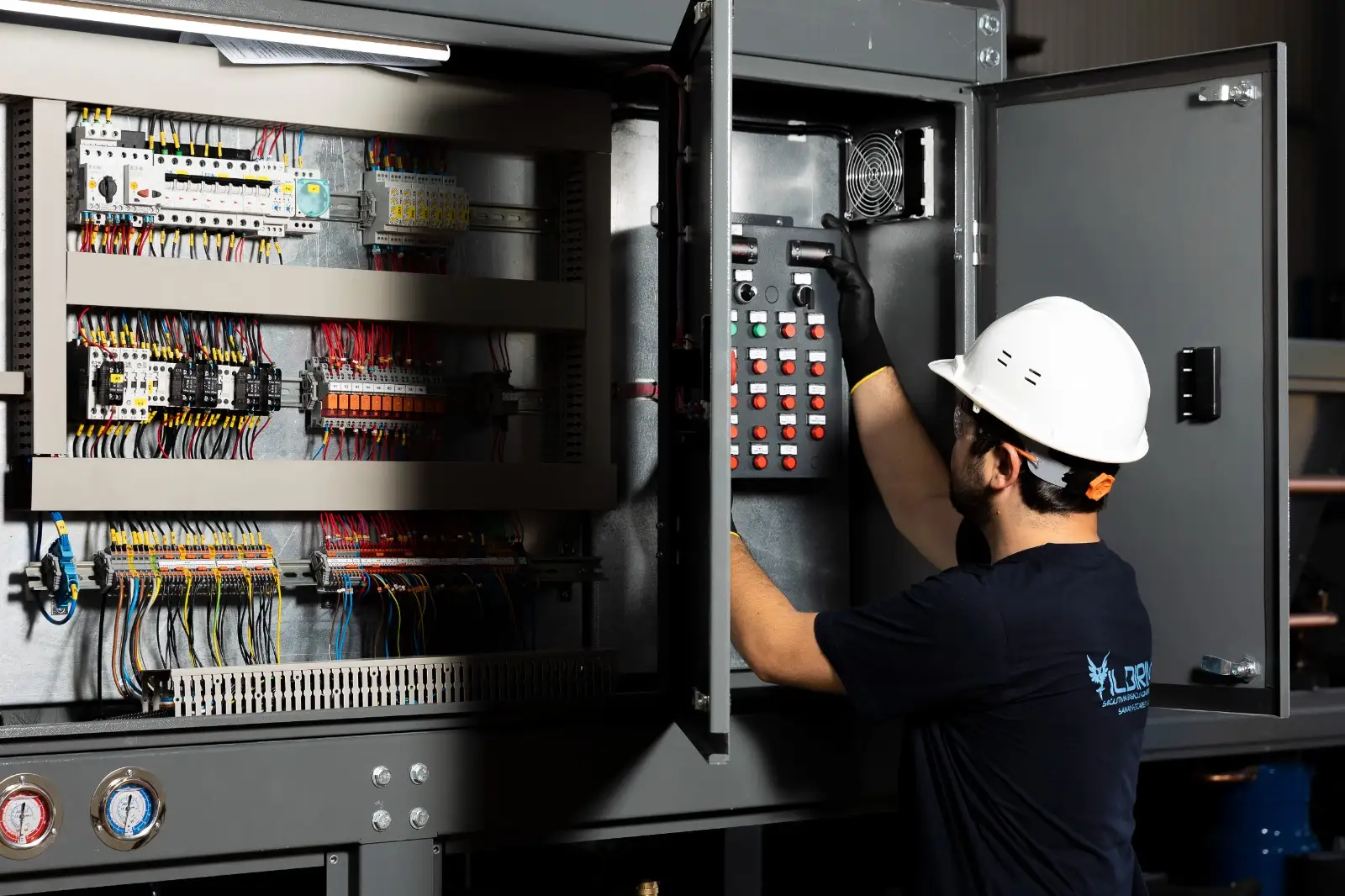
Industrial cooling units are managed by a complex electronic control mechanism. Contactors, fuses and terminals in the electrical panel can loosen or arc over time. This increases the risk of fire and also causes the system to run erratically. A professional chiller service scans all electrical connections with thermal cameras to identify overheating points in advance.
Sensors are the end devices that feed data to the PLC unit, the brain of the system. A temperature or pressure sensor that measures incorrectly causes the whole system to react wrongly. The calibration of sensors should therefore be checked regularly and renewed if necessary.
Points in Chiller Maintenance That Affect Energy Efficiency
Energy efficiency is the most tangible indicator of the success of a maintenance process. Keeping the condenser coils clean prevents the fans from running unnecessarily and reduces electricity consumption. A fouled heat exchanger can make the system use 20% more energy for the same cooling load. That is why the cleaning stage is the part of chiller maintenance with the most economical return.
Scaling and deposits on the water side are also a silent enemy that undermines efficiency. Checking water treatment systems and using suitable chemicals keeps the inner surfaces of the pipes smooth. The cleaner the heat transfer surfaces, the less energy the system needs to deliver maximum performance. Updating smart control algorithms also makes a big difference in energy management.
Setting the pumps correctly and balancing flow rates makes the hydraulic system work more efficiently. Pumping water at unnecessarily high pressure wears out the pumps and inflates the electricity bill. Checking the parameters of inverter systems allows motor speeds to be adjusted to load demand, offering huge savings.
Chiller Maintenance Checklist for Reducing the Risk of Breakdowns
To take a systematic approach, a standard inspection template should be used for every technical intervention. A chiller maintenance checklist prepared for this purpose eliminates technician error and ensures that all critical points are checked. The items on the list should include not only mechanical checks but also electrical and chemical tests.
The basic steps that should be on a proper checklist are:
- Checking the oil level and acidity.
- Measuring refrigerant pressures and checking for leaks.
- Testing electrical panel connections for tightness and overheating.
- Chemical cleaning of condenser and evaporator surfaces.
This list can be customized to each business's specific needs and unit model. Carrying out these items in full when chiller maintenance is due reduces unexpected breakdown downtime by 80%.
When Is a Professional Chiller Service Needed?
Although simple filter cleaning can be done by on-site staff, work on the main components requires expertise. In particular, for opening a compressor, charging refrigerant or PLC programming, you should always work with an authorized chiller service. An incorrect intervention can void the warranty on units or cause greater damage. Any situation that requires technical knowledge and special equipment is a sign that professional help is needed.
When high-pressure warnings or drops in efficiency become chronic, expert support is essential for an in-depth analysis. A professional chiller service quickly identifies the source of the problem with its advanced diagnostic tools. This speed minimizes downtime on the production line and prevents business losses. Working with an expert partner means handing over technical risks to professionals.
Long-Lasting, Efficient Systems with Yıldırım Soğutma
You can rely on Yıldırım Soğutma's expertise to maintain the performance of your industrial cooling systems and lower your energy costs. Our experienced technical team carries out meticulous maintenance and repair even on the most complex units, keeping your production running. With our fast 24/7 service network and genuine spare parts support, we are always by your side to extend the life of your cooling unit. Contact us for information about our professional maintenance plans and advantageous service solutions.
Frequently Asked Questions
How long does chiller maintenance take?
Depending on the unit's capacity and current condition, comprehensive maintenance is usually completed in 4 to 8 hours.
Does the quality of the water used affect maintenance?
Yes. Using hard, calcareous water causes blockages in the evaporator, increasing the frequency of maintenance and reducing efficiency.
What happens when chiller maintenance is overdue?
Energy consumption rises, cooling capacity falls and, most importantly, expensive parts such as the compressor face the risk of permanent damage.
Why should the chiller maintenance checklist be updated every year?
Technological updates and new needs that arise as the unit ages require the inspection criteria to be revised.