
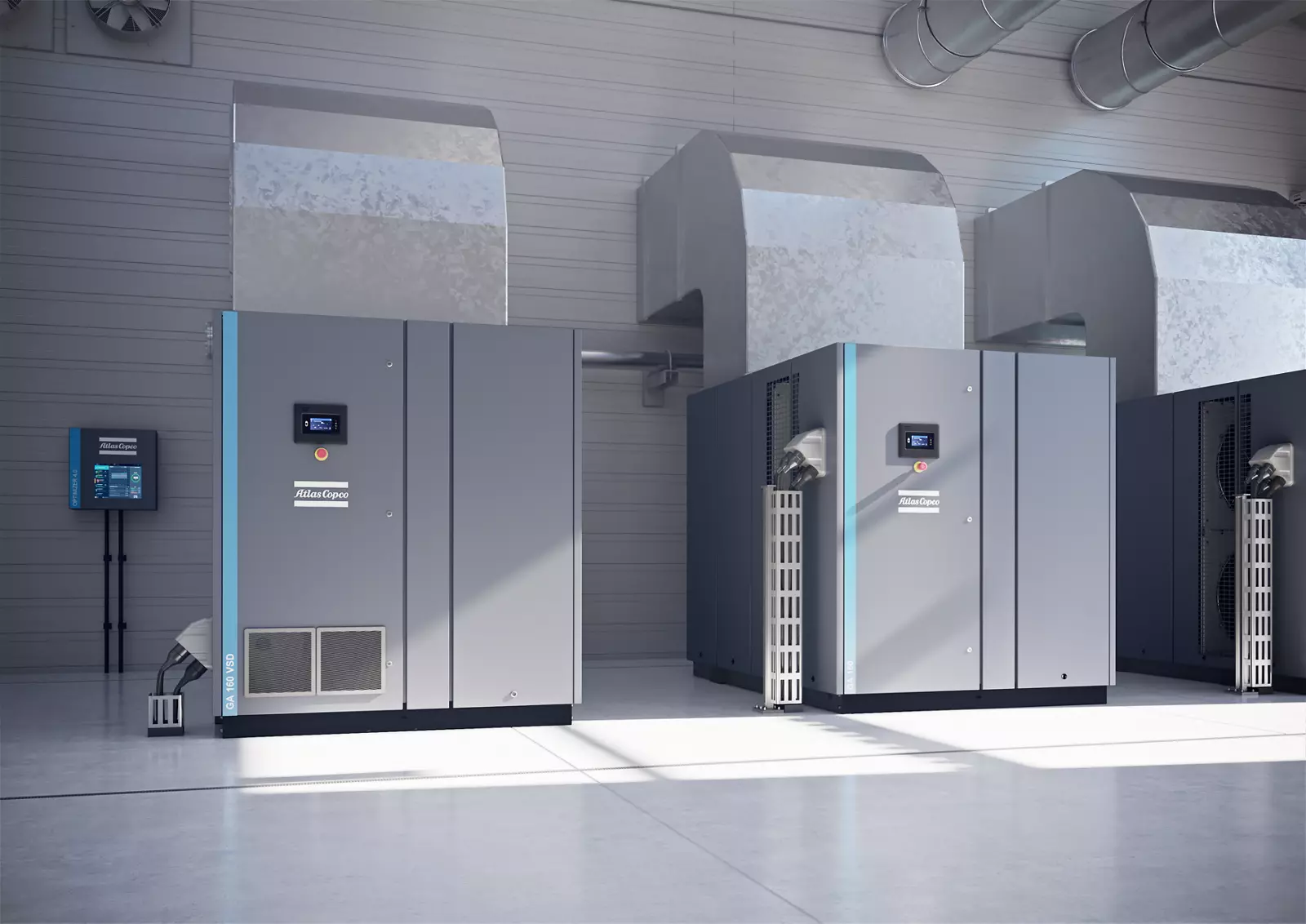
Why Does Compressor Selection Vary by Industry?
Every industry's production processes, operating times and use of compressed air are different. A one-size-fits-all compressor solution therefore does not deliver efficient results for every industry. For example, in facilities with continuous production, an uninterrupted air supply is the priority, while in businesses that operate seasonally, flexible capacity becomes more important. The pressure level, air quality and energy consumption expected also vary by industry. Choosing a compressor by industry therefore becomes a strategic decision that directly affects production continuity and operating costs.
Choosing a Compressor for Industry and Manufacturing
In industrial and manufacturing facilities, compressors are not just auxiliary equipment but a basic infrastructure component that directly affects production continuity. In these facilities, an air outage can stop the entire production line, so there is no room for error in compressor selection. Considering production intensity, the number of shifts, daily operating hours and sudden air demands, choosing a compressor by industry becomes a strategic planning process, especially for industrial facilities.
Production Lines That Require Continuous Operation
On production lines that run continuously, compressors are expected to deliver stable performance 24/7. In these applications, systems that start and stop frequently increase energy consumption and speed up mechanical wear. Industrial facilities should therefore choose highly durable compressors suited to long periods of operation. Redundant system configurations and planning maintenance so that it does not disrupt production are also important parts of the selection process.
Criteria for Choosing a Screw Compressor
Screw compressors are one of the most popular solutions in industry and manufacturing. The main reason is that these systems are suited to continuous operation and can meet high-flow air demand steadily. When choosing a screw compressor, capacity, maximum working pressure, motor power and the cooling system should be assessed carefully. A wrongly chosen model either creates a capacity shortfall or causes unnecessary energy consumption. Here, choosing a compressor by industry requires making the right match among screw compressor types.
Energy Efficiency and Pressure Requirements
In industrial facilities, energy costs make up a significant share of total operating expenses. Compressors running at higher pressure than necessary cause serious energy losses. When choosing a compressor, the minimum pressure the production line needs should therefore be clearly defined and the system configured accordingly. Systems with high energy efficiency and precise pressure control provide a cost advantage in the long run and extend equipment life.
Choosing a Compressor for the Automotive Industry
In the automotive industry, compressors play an active role in many critical processes such as assembly, painting, surface preparation and operating pneumatic equipment. A wrong compressor choice in this field can cause not only a loss of efficiency but also fluctuations in product quality and faulty production. Especially in automotive facilities with many precision processes, choosing a compressor by industry should be assessed on the criteria of air quality, pressure stability and uninterrupted operation.
Compressors for Painting and Coating
In the automotive industry, painting and coating are among the processes most sensitive to compressed air quality. Fluctuating pressure or humid or dirty air can cause serious quality problems on the paint surface such as orange peel, bubbles and color inconsistencies. The compressors used on paint lines therefore need to be systems that produce stable pressure, have low vibration and deliver a balanced air flow. Screw compressors are generally preferred in these applications because they offer advantages in continuity and performance.
Air Quality and Filtration Requirements
In automotive production, not just the pressure value but also the purity of the air is critical. Compressed air containing oil vapor, moisture and particles has a negative effect on spray guns, robotic systems and pneumatic equipment. When choosing a compressor, it is therefore essential that the system is supported with suitable filtration and drying equipment. In automotive applications that require high air quality, choosing a compressor by industry must always be considered together with the filtration infrastructure.
Compressor Guide for the Food and Beverage Industry
Because the compressed air used in the food and beverage industry can come into direct or indirect contact with the product, compressor selection is a critical safety issue. A wrong choice in this industry can put not only production efficiency but also product safety and brand reputation at risk. In food and beverage facilities, choosing a compressor by industry should therefore be based on hygiene, air quality and legal standards.
The Importance of Using Oil-Free Compressors
One of the biggest risks in food production is oil contamination from the compressed air system. Oily air can contaminate products directly or leave residues on packaging surfaces. Oil-free compressor systems should therefore be the first choice in food and beverage facilities. Oil-free compressors protect product quality by providing a safe air source, especially on filling, packaging and labeling lines.
Compliance with Hygiene Standards
Compressor systems used in the food industry should be assessed not only for technical performance but also for hygiene standards. They need to be supported with suitable drying and filtration systems to remove moisture, particles and microorganisms from the compressed air. Compliance with HACCP and similar food safety standards is an integral part of compressor selection. Here, choosing a compressor by industry requires a holistic approach that covers not just the unit itself but the whole air treatment infrastructure.
Choosing a Compressor for Healthcare and Medical Use
In the healthcare and medical sector, compressors are not just technical equipment but are directly related to patient safety and quality of care. In this field, compressed air is used in many important applications, from respiratory support systems to surgical equipment. A wrong compressor choice can therefore disrupt clinical processes and create serious hygiene risks. In healthcare facilities, choosing a compressor by industry should be approached with a focus on safety and continuity.
Compressors for Dental Clinics and Hospitals
Compressors used in dental clinics and hospitals usually run intermittently but intensively throughout the day. A continuous, stable air supply is needed for dental units, surgical instruments and pneumatic equipment. It is therefore important that the compressors chosen for medical facilities are reliable systems with low pressure fluctuation and minimal maintenance needs. In environments where several units run at the same time, capacity planning must also be done correctly.
Quiet Operation and Oil-Free Air Requirements
One of the most critical criteria when choosing a compressor in healthcare is quiet operation. Noisy systems can adversely affect patient comfort and the working environment. In addition, compressed air containing oil is an unacceptable risk in medical applications. Dental clinics and hospitals should therefore choose oil-free compressors with low noise levels. This approach ensures compliance with hygiene standards and creates a safe working environment in the long run.
Choosing a Compressor for Construction and Building Sites
On construction and building sites, compressors serve applications that work under heavy and variable loads, such as breakers, drilling equipment, spraying systems and pneumatic hand tools. When choosing a compressor in these sectors, unlike fixed facilities, portability, durability and high instantaneous air demand come first.
Portable Compressors
Portable compressors are the most common solution for site applications. Thanks to their wheeled or trailer-mounted design, these systems can easily be moved to different points and offer flexible use on site. When choosing a portable compressor, flow capacity, fuel type and ease of maintenance should be assessed carefully. For equipment that is constantly moved, models that can be brought online quickly and have operator-friendly control systems should be preferred.
Suitability for Harsh Site Conditions
Construction sites are exposed to dust, moisture, temperature changes and physical impacts. The compressors used must therefore have a body built to withstand heavy-duty conditions and a powerful cooling system. Systems with insufficient protection can quickly lose performance or face an increased risk of breakdown.
Compressor Selection Criteria for the Textile Industry
In the textile industry, compressed air plays an important role at many stages, from yarn production to weaving and dyeing, and from automation systems to pneumatic equipment. Compressor selection therefore directly affects production quality and continuity. The wrong capacity or insufficient air quality can cause stoppages on production lines and product defects.
The Need for Uninterrupted Air Flow
Textile production lines usually run for long periods at a high pace. Even the slightest interruption in compressed air flow during this process can cause machine stoppages and lost production. The compressors chosen for textile facilities must therefore be suited to continuous operation and not create pressure fluctuations. Solutions with balanced load/unload transitions and stable flow also help production lines run efficiently.
Moisture and Particle Control
In the textile industry, the moisture and particle content of compressed air is very important for product quality. Humid air can cause structural damage to yarns, defects on the fabric surface and corrosion of machine components. Similarly, air containing particles speeds up wear on sensitive equipment. When choosing a compressor, it is therefore essential that the system is supported with effective drying and filtration equipment.
Choosing a Compressor for Workshops and Small Businesses
In workshops and small businesses, compressors are used for a variety of jobs such as spray guns, pneumatic hand tools, cleaning and light production. When choosing a compressor for these businesses, suitability for the need and efficient use matter more than high industrial capacity. Choosing the wrong capacity can lead to both unnecessary costs and insufficient performance. For small businesses, choosing a compressor by industry should therefore balance frequency of use, pressure needs and budget.
Advantages of Piston Compressors
Piston compressors are frequently chosen in workshops and small businesses thanks to their practical use and low initial investment. Suited to intermittent operation, they are an ideal solution for applications with short-term, variable air demand. Their simpler maintenance and operation are also a significant advantage for businesses with limited technical infrastructure. When chosen correctly, piston compressors deliver sufficient performance economically in workshop environments.
Choosing Capacity and Receiver Volume
When choosing a compressor, you should look not only at motor power but also at receiver volume and air output capacity. A compressor with a small receiver can start and stop frequently, shortening equipment life. Conversely, receivers that are larger than necessary both increase costs and lead to inefficient use. The right receiver volume should be determined by analyzing the simultaneous air consumption of the equipment used in the workshop. This approach gives small businesses the most balanced result in the process of choosing a compressor by industry.
General Criteria to Consider When Choosing a Compressor by Industry
Regardless of industry, choosing the right compressor should be assessed not only by the unit's initial purchase price but by long-term performance, energy consumption and operational continuity. Choices made without considering the production structure, operating time and intensity of air use can lead to serious costs over time. Choosing a compressor by industry should therefore be treated as a technical analysis that centers on each business's own operational needs.
Calculating Pressure and Flow
One of the most basic criteria in compressor selection is correctly calculating the required pressure and air flow. Choices made without determining the working pressures and simultaneous air consumption of the equipment used lead either to insufficient capacity or to unnecessarily high energy consumption. As well as the pressure requirement, how long and how intensively this pressure will be used should also be assessed. For a sound choice, the flow calculation should be based on real use scenarios.
Energy Consumption
In many facilities, compressors are among the most energy-hungry equipment. Energy efficiency is therefore a critical factor that should not be overlooked in the selection process. A compressor running at higher pressure than necessary or with the wrong capacity causes serious energy losses in the long run. When systems with the right capacity and precise pressure control are chosen, operating costs can be reduced significantly.
Ease of Maintenance and Service
The maintenance requirements and service accessibility of the compressor chosen are very important for the sustainability of the system. Systems that are hard to maintain, have limited spare parts or a weak service network can cause production interruptions and unexpected stoppages. When choosing a compressor, how easily regular maintenance can be carried out and what technical support is available must always be assessed. Choosing a compressor by industry requires a holistic approach that covers not only technical specifications but also after-sales services.
What Does Choosing the Right Compressor Bring a Business?
Choosing the right compressor is a strategic investment in efficiency, cost control and production continuity. A compressor chosen to match the need optimizes energy consumption and lowers operating expenses, while preventing unplanned stoppages and the risk of breakdowns. Systems running at the right capacity and pressure also extend equipment life and reduce maintenance costs. With this approach, choosing a compressor by industry gives businesses sustainable performance and long-term operational advantages.
Let's Find the Right Compressor Solution for Your Industry Together
At Yıldırım Soğutma, we analyze your production structure, operating conditions and energy goals to plan the compressor solution that best suits your business. With our experienced technical team and strong service infrastructure, we help you choose the right compressor with confidence. Contact us for solutions tailored to your industry.