
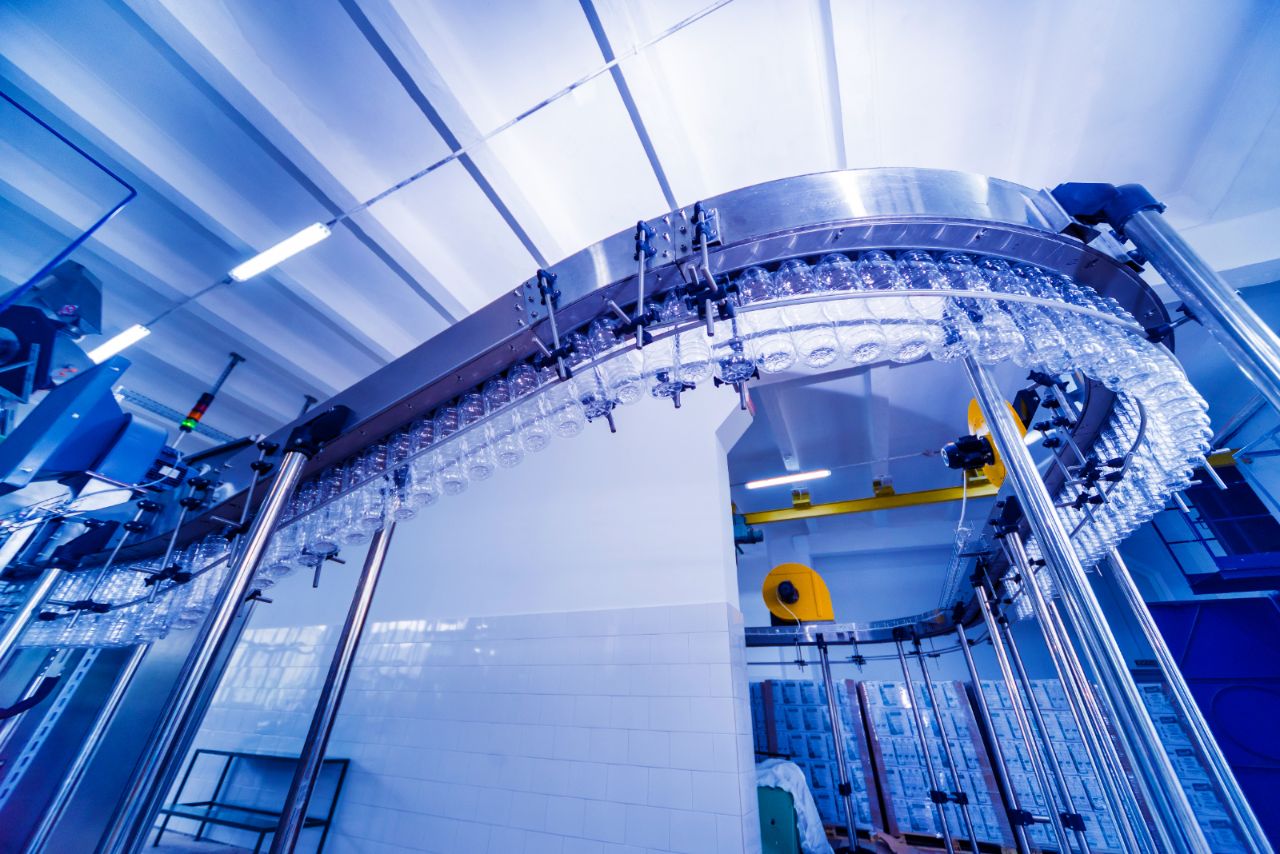
Because the compressed air used in food production facilities comes into direct or indirect contact with the product, it is one of the most sensitive links in the hygiene chain. Oil, moisture and particles in the air can threaten food safety, spoil product quality and pose serious risks to human health. This is where the ISO 8573 standards come in, giving producers a way to define and control the purity of the air.
The Main Purpose of the ISO 8573 Standard in Food Safety
ISO 8573 gives producers a roadmap by classifying the main contaminants in compressed air into three groups. The standard grades air quality by particle content, water content (dew point) and total oil content. In the food industry, which of these classes should be chosen depending on how much the air comes into contact with the product is one of the points most closely examined in international food safety audits.
The Main Contaminants in Air: Particles, Water and Oil
Solid particles in compressed air usually come from dust drawn in from the ambient air or from wear in the pipelines. These microscopic particles can stick directly to the food and spoil its purity. Filter systems come into play here, separating foreign matter in the air according to its class.
Water vapor and oil not only spoil the product but also create a breeding ground for microorganisms. Bacteria that multiply in a humid environment can spread along the air line and contaminate the entire production line. Oil residues cause changes in the taste and smell of food, endangering consumer health and brand reputation.
The Critical Role of Oil-Free Compressors in the Food Industry
Using oil-free compressors in food facilities is the strongest step that can be taken to eliminate the risk of oil contamination at its source. With oil-injected compressors, however powerful the filters, there is always a chance that some oil vapor will get into the system. Oil-free systems, on the other hand, use no oil during compression and produce pure air that meets "Class 0" certification.
"Class 0" certification refers to the strictest quality class, which defines the lowest tolerance level for oil contamination in compressed air. Using a compressor with this class greatly strengthens a business's hand in food safety audits.
Oil-free compressors also balance filtration costs in the long run. Because no oil builds up on the filters, pressure losses are reduced and energy efficiency increases. Keeping not only the unit itself but the entire air line clean also has a positive effect on the machines' service life.
Choosing Filtration and Drying Systems
The dryers used to remove moisture from compressed air in food facilities are usually desiccant dryers that can reach a dew point of -40°C. At this low moisture level, bacteria and mold spores cannot survive.
The filtration process usually has a staged structure:
- First Stage: Coarse particles are trapped by line filters.
- Final Stage: Activated carbon towers and sterile filters come into play. Activated carbon absorbs oil vapors and unwanted odors in the air, making the air food-grade.
- Sterile Filters: These are indispensable especially at finishing stages such as packaging or bottling. These filters are capable of retaining 99.99% of the live microorganisms in the air.
Direct and Indirect Contact: Air Quality Classification
A comprehensive risk analysis should be carried out to determine which points involve direct contact and which involve indirect contact. These analyses are a basic requirement of food safety management systems (HACCP):
Direct Contact: If the air is blown directly onto the product or enters the packaging, it falls into this class and requires the highest level of purity. In this scenario, very strict values such as ISO 8573-1 Class 1-2-1 are targeted. Indirect Contact: The air is generally used to move a machine or operate conveying systems. Although the risk is somewhat lower, using highly filtered air is standard practice because air released from exhaust outlets may settle on food surfaces.Traceability and Regular Analysis
Proving that air quality is maintained over time is as important as achieving it. Regular air analyses are one of the clearest indicators for assessing the efficiency of filter and dryer systems. Carried out by independent laboratories, these tests formally document compliance with the ISO 8573 standards. Sensors that measure continuously give a warning when there are instant deviations, preventing faulty production.
Zero Contamination and Expert Support in Food Safety with Yıldırım Soğutma
To fully meet the ISO 8573 standards on your food production lines and reduce the risk of oil contamination to zero, you can take advantage of the Atlas Copco oil-free compressor technologies offered by Yıldırım Soğutma. Our expert technical teams analyze the air quality in your facility and design the right filtration and drying solutions so you can achieve full compliance in food safety audits. We are always by your side with our 24/7 service support.