
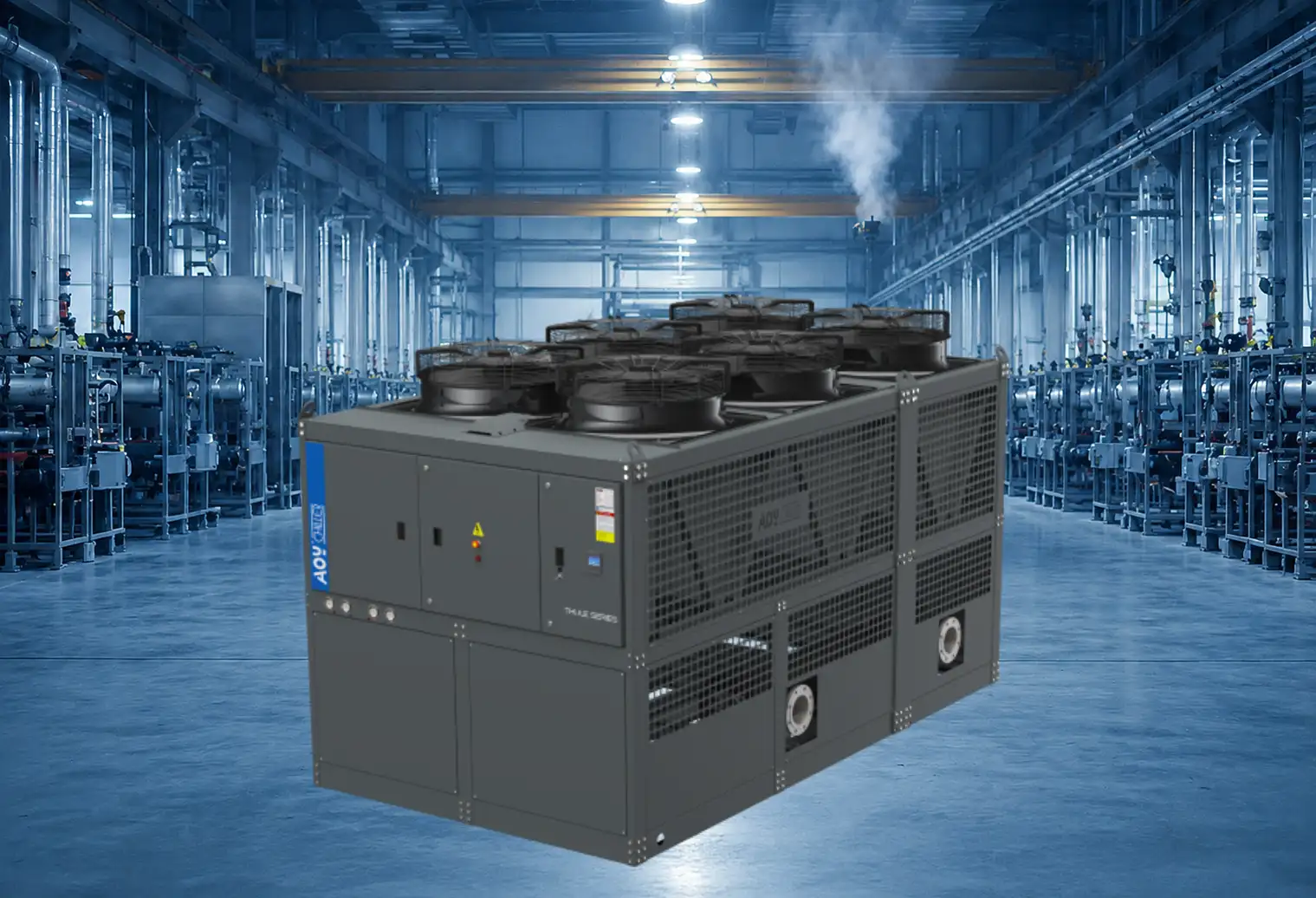
The Importance of Chiller Systems in Food Production
Food production processes naturally involve physical and chemical stages that release a lot of heat. If the heat released in these processes is not removed quickly, products can suffer structural damage and machines on the production line can overheat. Chiller units are the most effective industrial solution for bringing this heat under control by cooling water or special coolants.
Its role in protecting the cold chain
The shelf life and freshness of food products depend directly on the temperatures along the way from production to consumption. Sudden temperature changes on the production line can spoil organoleptic properties such as taste, smell and appearance. A central cooling unit keeps the first link of the chain strong by delivering the chilled water needed to every critical point in the facility.
The cold chain must be carefully managed not only during storage but also during processing. Especially with perishable foods such as dairy, meat and seafood, the rapid cooling stage after heat treatment is very important. A system that falls short at this stage delays the product's core temperature from dropping to the required level and seriously shortens its shelf life.
A well-designed infrastructure provides steady cooling unaffected by seasonal temperature swings. Higher outdoor temperatures in summer put an extra load on cooling systems. A system that can maintain product temperature even during these periods helps profitability by reducing waste.
Effect on production quality and hygiene standards
Food safety standards require temperature and humidity in production areas to be kept under constant control. High temperatures create a favorable environment for bacterial growth, while a properly working cooling system reduces the risk of pathogens. Choosing systems that keep air and water at ideal values for a hygienic production process helps pass regulatory inspections.
Production quality means maintaining standards in every batch. Even the smallest fluctuation in cooling water temperature can upset the balance of a product formula and lead to quality variations. For this reason, equipment used in food facilities is expected not only to cool but to keep that cooling stable within a precise tolerance.
High humidity in food production areas can trigger mold and fungus growth. Air conditioning units working together with chiller systems minimize these risks by controlling humidity. Ensuring hygienic production conditions directly strengthens the reliability of the products offered to consumers and the brand's image in the market.
Criteria to Consider When Choosing a Chiller System
To choose the right system, a professional analysis of the facility's technical needs must be carried out first. When calculating the cooling load, the climate of the facility's region and the maximum capacity of the production line should be taken as the basis. A miscalculated capacity will cause the system either to cycle on and off constantly or never to deliver the cooling needed.
Cooling capacity and production volume
The facility's hourly and daily production volume determines the total cooling load required in kilocalories. A backup plan should be created taking into account the number of machines on the production line and their operating periods. Calculating capacity too tightly can cause the system to struggle and fall short in extreme summer heat.
As volume increases, it is an advantage if the cooling system has a modular structure that can respond to this load. With future growth targets in mind, a setup should be built whose capacity can be increased or supported with additional units. Proper capacity management keeps the system running at an efficient point and prevents unnecessary wear on parts.
In capacity analysis, the difference between the product's inlet temperature and the required outlet temperature is the most critical data point. For blast-chilling processes that require rapid cooling, the system must be able to handle instantaneous loads. In facilities where the wrong capacity was chosen, production speed may have to be slowed to match the cooling system, which is a loss of efficiency.
Energy efficiency and operating costs
Cooling and air conditioning systems account for a large share of energy consumption in food facilities. High seasonal efficiency ratings for the chosen unit mean direct savings on electricity bills. Energy-saving compressors and smart control systems are among the technologies that pay back the investment cost quickly.
Operating costs are not limited to electricity consumption; water consumption, chemical treatment and part replacements should also be taken into account. Especially in regions with water scarcity, water recovery or closed-loop systems reduce costs. When analyzing efficiency, it is better to carry out a comprehensive assessment based on the system's total annual cost of ownership.
Investing in a high-efficiency water-cooled chiller is the best way to minimize operating expenses. When comparing energy labels and performance coefficients, you should not look only at full-load values. Performance at low loads is what really determines total energy consumption over the year.
Ambient conditions and process requirements
The ambient temperature, humidity and air circulation where the system will be installed directly affect the unit's performance. In environments with dust or corrosive gases, the condensers and internal components need to be coated with special protective layers. The water outlet temperature required by the process is another variable that plays an important role in the system's design.
Some food processes need water at very low temperatures, while others only need the ambient air to be cooled. The unit's hardware, type of fluid and pump pressures should be customized to the nature of the need. Choosing the configuration most resistant to ambient conditions keeps the process running and prevents downtime caused by breakdowns.
Geographical details such as the facility's altitude and average wind speed change the unit's heat transfer capability. In coastal facilities, the unit casing can deteriorate quickly if materials with high corrosion resistance are not chosen. Environmental conditions are therefore one of the most important parts of the technical file at the design stage.
Chiller Systems Used in the Food Industry
In the food industry, cooling solutions are mainly developed around two core technologies. These technologies differ in how heat is removed from the system, and each has its own areas of application. The facility's layout, its proximity to a water source and its budget are the main factors that determine which of the two is chosen.
Air-cooled chiller systems
These units use their fans and the surrounding air to reject the heat from the system. Their relatively easy installation and zero water consumption make them ideal for facilities with limited water. They are usually mounted outdoors, on roofs or in open areas to make the most of natural air flow.
An air-cooled chiller unit is easier to maintain, especially in regions with poor water quality. Because it does not need a separate cooling tower, it saves space and reduces system complexity. However, the efficiency of these systems tends to drop as the outdoor temperature rises, so performance monitoring becomes important in summer.
For businesses that want to avoid water treatment costs, an air-cooled chiller is a very practical solution. Pump station and piping costs are lower than for water-based systems. Boutique food producers and medium-sized bakeries in particular benefit from this compact design.
Thanks to advanced fan technologies, a modern air-cooled chiller can now run much more quietly. This is a big advantage for facilities near residential areas where noise pollution matters. New energy-efficiency-focused models optimize electricity consumption using variable speed fans.
Water-cooled chiller systems
These systems transfer heat through water and usually work together with a cooling tower. Because water has a higher heat transfer coefficient than air, these units can achieve very high efficiency values. In large food facilities and indoor installations in particular, using a water-cooled chiller significantly reduces energy costs.
If the facility has a continuous water source such as a well or a river, water-cooled chiller systems become the most economical solution. These units are less affected by extreme outdoor heat than air-cooled models. However, monitoring the water chemistry and keeping up with cooling tower maintenance is essential for the health of the system.
In industrial-scale dairy processing plants, a water-cooled chiller is indispensable for high-flow chilled water needs. Because these systems can be installed indoors, the unit is protected from external factors. In projects where space is limited but the cooling load is very high, they can offer vertical solutions.
The efficiency of a water-cooled chiller unit is directly linked to the performance of the cooling tower. The lower the tower water temperature can be kept, the less energy the compressor uses. Water softening systems that improve water quality should therefore also be considered part of the investment.
Industrial solutions for process cooling
In food production, situations sometimes arise that go beyond standard units, requiring much lower temperatures or rapid cooling. For example, in blast freezing or chocolate molding processes, custom-designed units using glycol water come into play. Thanks to fluids with low freezing points, these systems continue to operate safely even at sub-zero temperatures.
When designing industrial solutions, using stainless steel heat exchangers and food-grade materials is critical for hygiene. Inverter control technologies that can respond instantly to load changes on the production line are also integrated into these systems. This way, exactly the cooling power needed is produced at every moment of the process, avoiding wasted energy.
Custom-designed units can be programmed to follow the heat profile of specific machines on the production line. Because some food products require gradual rather than rapid cooling, the system is expected to have this flexibility. Here, smart automation software acts as the brain of the cooling unit and perfects the process.
The Cost of Choosing the Wrong Chiller
Choosing the wrong unit may look affordable at first, but it can blow a big hole in the operating budget in the long run. An air-cooled chiller with insufficient capacity can keep raising alarms in summer, bringing production to a halt. On the other hand, an oversized system cycles on and off constantly, shortening compressor life and wasting electricity.
Production losses and product quality problems
Fluctuations in the cooling system cause undesirable changes in the texture and color of food products. For example, in ice cream production, slow cooling leads to large ice crystals and a gritty mouthfeel. When stable cooling cannot be provided, product shelf life shortens and a noticeable rise in returns is seen.
Downtime is the biggest nightmare for food facilities because spoiled raw materials usually cannot be recovered. Frequent breakdowns of a poorly chosen unit lead to lost labor and missed orders. The cost of destroying products that fail quality control can easily exceed the cost of investing in the right system.
On lines processing sensitive foods, a cooling interruption accelerates microbial growth and creates serious health risks. This can lead to severe consequences, up to legal sanctions and the revocation of production permits. The cooling system should therefore be seen not just as auxiliary equipment but as a fundamental part of product safety.
High energy consumption and maintenance costs
An older, low-efficiency air-cooled chiller unit can consume up to 30% more energy than modern alternatives. This shows up as a huge electricity expense on the year-end balance sheet. In addition, using incompatible parts or choosing the wrong capacity causes the unit's mechanical components to wear faster than normal.
Maintenance costs also climb with the wrong choice. For example, a water-cooled chiller system installed without a water quality analysis has to cope with constantly clogging heat exchangers. Systems that frequently require professional intervention place a heavy burden on the operating budget through service fees and spare parts costs.
Mistakes such as an incorrect refrigerant charge or a poor-quality compressor lower the system's COP. This causes the unit to run constantly at full load to provide cooling. While the replacement interval of overworked parts shortens, the business is faced with expensive parts bills at unexpected times.
Advantages of Using Energy-Efficient Chillers in Food Facilities
Investing in energy-efficient systems is the smartest strategy in the face of today's rising energy costs. Thanks to advanced control algorithms, a new-generation water-cooled chiller anticipates load changes and adjusts its operation accordingly. This way only the amount of cooling needed is produced, and wasted energy is avoided.
Reducing electricity consumption
Advanced motor drives and optimized fan designs are the most important factors in the electricity bill. Systems that run efficiently at partial loads deliver significant savings when the facility is not running at full capacity. Lower electricity consumption also reduces the business's unit product costs, increasing its competitiveness in the market.
When a high-efficiency water-cooled chiller is chosen, the system's performance coefficients stay at much higher levels. This means much more cooling energy is obtained for every unit of electricity used. Over the long term, these savings add up to an amount that covers the unit's purchase price many times over.
New-generation inverter compressors have a much more stable energy profile than fixed-speed models. Low starting currents also reduce stress on the facility's electrical infrastructure. This also protects other sensitive electronic equipment in the business from sudden voltage fluctuations.
Contribution to sustainable production
Sustainability has become one of the most fundamental goals of the modern food industry. Choosing an air-cooled chiller that consumes little energy reduces indirect emissions released into the atmosphere. In addition, the new-generation refrigerants used in modern units do not harm the ozone layer and have a low global warming potential.
Efficient use of resources is not limited to energy; systems that recover water also support sustainability. An efficiency-focused water-cooled chiller allows water to circulate in the system for longer and more efficiently.
Long-term investment advantage
Although energy-efficient systems usually have a higher initial cost, their payback period is quite short. Durable, efficient equipment breaks down less and keeps costs low throughout its service life. A technologically up-to-date air-cooled chiller also protects the business against energy restrictions that may arise in the coming years.
The investment advantage should be measured not only in money saved but also in production security. Efficient systems are generally built from higher-quality components, which minimizes the risk of unexpected downtime. A facility that can produce without interruption is always one step ahead in protecting its market share and meeting customer demand on time.
Chiller Maintenance and Performance Management for Food Production Facilities
Regular maintenance is the most important activity for extending the life of cooling units in food facilities and maintaining their efficiency. A poorly maintained water-cooled chiller quickly loses its heat transfer capability due to scaling and biological fouling. This leads the system to use more energy while delivering less cooling, and eventually to critical breakdowns.
The importance of periodic maintenance
Periodic maintenance includes cleaning the condensers, checking for refrigerant leaks and tightening electrical connections. An air-cooled chiller with a clean condenser transfers heat to the air much more easily, preventing strain on the motor. These routine checks keep the unit close to the efficiency values it had on the day it left the factory.
Because of the hygiene sensitivity of food facilities, analyzing the cooling water is also part of periodic maintenance. In a water-cooled chiller unit in particular, permanent damage can occur in the heat exchangers if the water's pH balance and mineral content are not monitored. Regular service support is essential for protecting the unit's warranty rights.
Performance monitoring and breakdown prevention methods
Thanks to the sensors used in modern systems, inlet and outlet water temperatures, pressure values and energy consumption are recorded in real time. An abnormal pressure rise in a water-cooled chiller unit can be an early warning of a problem in the tower or pumps. Monitoring this data on a control panel allows operators to take the right action quickly.
Breakdown prevention methods also include vibration analysis and thermal camera inspections. In particular, by tracking the vibration values of high-capacity air-cooled chiller fan motors, bearing failures can be predicted in advance. This approach, called predictive maintenance, resolves the problem with a planned shutdown and prevents surprise breakdowns at peak production times.
Digital monitoring systems help identify seasonal performance trends by analyzing historical data. Additional measures can be taken once it is known under which conditions the system is under more strain. With data-driven management, the success of the cooling operation is not left to chance.
Chiller Solutions for Food Facilities with Yıldırım Soğutma
We provide all the professional support you need to choose the right technology by examining your facility's operating pattern and production conditions. Our main goal is to integrate systems into your business that lower your energy costs without compromising food safety. Throughout this process, we do not just supply equipment; we stand by you as a technical solution partner that adds value to your production.
Capacity analysis tailored to your needs
Every food facility has a different production rhythm, and standard solutions do not always deliver the expected efficiency. Our technical teams visit your facility, measure your current loads and prepare a capacity report that takes your future growth projections into account. This way, we guide you toward a chiller investment that is neither oversized nor undersized, but exactly right for your needs.
Design, installation and technical service support
At the design stage, we plan the piping and automation infrastructure to engineering standards and carefully complete commissioning after installation. After the sale, we are quickly by your side for any chiller breakdown with our uninterrupted 24/7 technical service support.
Energy-efficient, long-lasting system solutions
You can make use of our professional solutions to protect your food safety while building an environmentally conscious, sustainable infrastructure. Contact us today to improve your production efficiency and hear about our tailored cooling projects.
Frequently Asked Questions (FAQ)
Which chiller system should food production facilities choose?
The facility's access to water and the space available determine the choice. If water is not limited and high efficiency is required, a water-cooled chiller should be chosen; if easy installation and low water consumption are the priority, an air-cooled chiller is the better choice.
How is chiller capacity calculated?
The capacity calculation is based on the heat load of the machines on the production line, the product's inlet and outlet temperatures, hourly production volume and ambient temperature. Having this calculation done by expert engineers gives the most accurate result.
What is the difference between an air-cooled and a water-cooled chiller?
The main difference is how heat is rejected. An air-cooled chiller rejects heat to the air with fans, while a water-cooled chiller uses water and a cooling tower for this. Water-cooled units are generally more efficient but require a more complex infrastructure.
Are energy-saving chiller systems really worth it?
Yes. Especially in facilities that produce 24/7, such as food plants, an energy-saving water-cooled chiller usually pays back its investment cost within 1–2 years through the electricity it saves.
How often should chiller systems be serviced in the food industry?
In food facilities with intensive production, comprehensive periodic maintenance should be carried out at least twice a year. Checks at the change of seasons make sure the system is prepared for extreme heat or cold.
Does chiller selection affect production quality?
It certainly does. An air-cooled chiller that cannot provide precise temperature control can cause products to spoil, change texture or develop bacteria, leading directly to a loss of quality.