What Is a Chiller and How Does It Work?
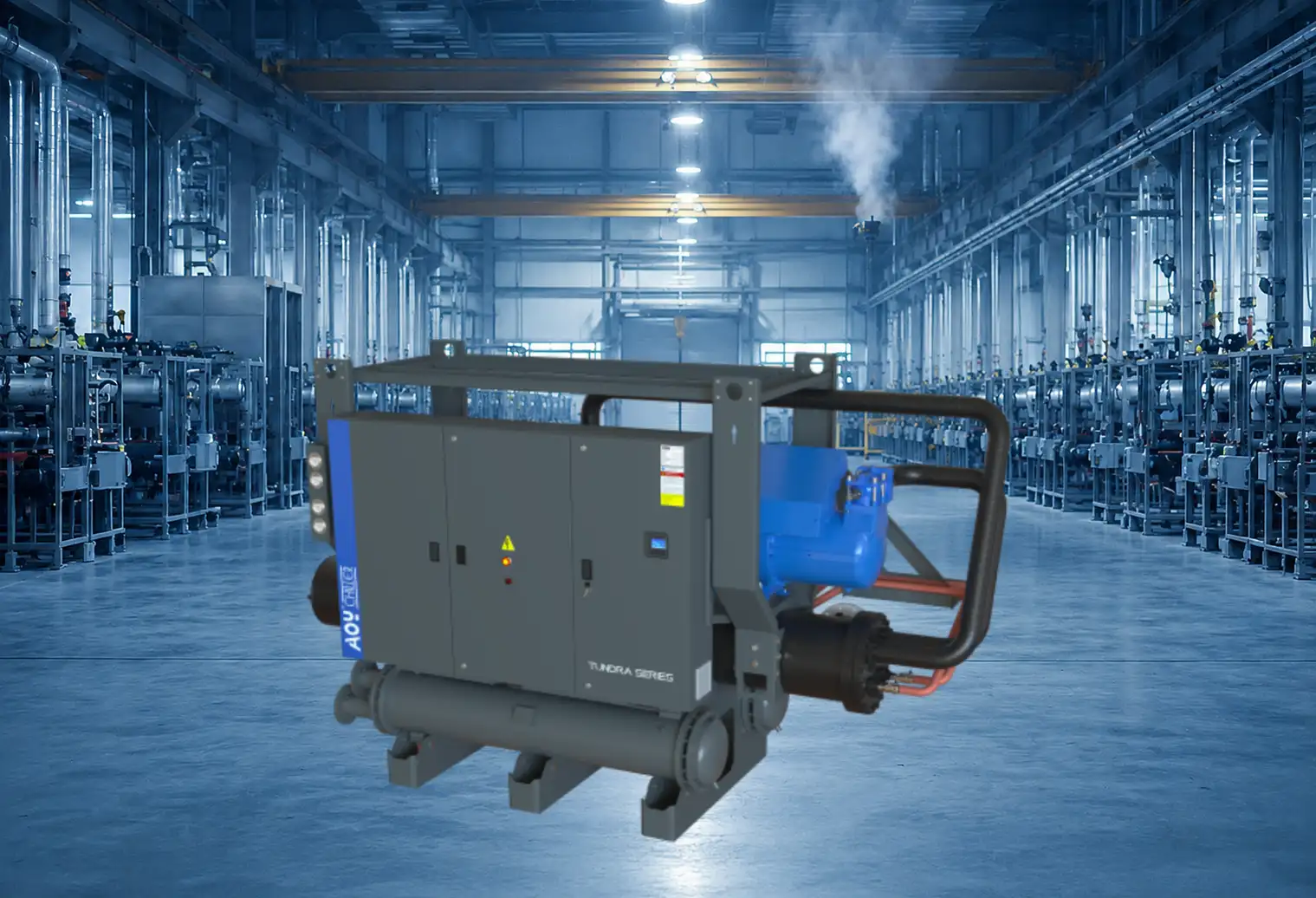
A chiller is a professional unit that works on the principle of the refrigerant inside it changing phase, transferring heat from one medium to another. It basically consists of a compressor, a condenser, an expansion valve and an evaporator. The system provides a cyclical mechanism by bringing process water or a glycol mixture down to the required low temperatures.
Its operating logic is based on the refrigerant in the evaporator absorbing heat and turning into gas, which is then compressed in the compressor and sent to the condenser. In the condenser, the refrigerant releases heat to the outside and liquefies again, and the process returns to the start through the expansion valve. Thanks to this continuous cycle, heating problems across the facility are completely eliminated by a modern chiller system. In high-capacity businesses in particular, these units manage calibration with great precision.
Why Is Using a Chiller Important in Industrial Facilities?
During production, machines and raw material processing release a significant amount of thermal energy. If this heat is not removed in a controlled way, equipment overheats, leading to breakdowns. Using an industrial chiller minimizes these risks and allows the production line to run without stopping. Preventing sudden stoppages plays a big role in meeting annual production targets.
In industries that require precise temperature control, such as chemicals or plastics, a deviation of even one degree can spoil product quality. By providing stable temperature control, these units guarantee that products meet world standards. This stability is also the biggest factor in slowing machine wear and extending service life. Equipment health is essential to a business's sustainability.
With energy costs rising today, managing heat efficiently is directly linked to profitability. A correctly configured industrial cooling infrastructure prevents unnecessary energy consumption and ensures resources are used more efficiently. For industrial facilities, this technology is therefore not just a machine investment. On the contrary, it is a strategic move that increases the business's overall efficiency and competitiveness.
Where Are Chiller Systems Used?
These cooling units perform critical tasks across a very wide industrial spectrum. They are found everywhere, from cooling plastic injection molds to keeping products from spoiling in food facilities. In the pharmaceutical industry, industrial chiller systems are needed to hold chemical reactions at a specific temperature. High-tech medical equipment such as hospital MRI machines is also protected this way.
In the textile industry, balancing the high heat generated during dyeing is vital for fabric quality. In metalworking and laser cutting machines, a chiller system is used to prevent the laser head from burning out. Data centers use this technology to manage the huge heat given off by servers.
Differences Between Air-Cooled and Water-Cooled Chillers
Air-cooled units are systems that release their heat directly into the atmosphere through condenser fans. These models are generally preferred in open areas or on roofs because they are easy to install and need little maintenance. Not needing an extra cooling tower makes them a practical solution for facilities with limited space. Because they use outdoor air, their mechanical complexity is lower.
Water-cooled units, on the other hand, remove heat through a water loop and send it to cooling towers. This type of chiller system is usually located inside a building or in an enclosed space and offers much higher energy efficiency. Water-cooled models stand out especially in huge businesses with plentiful water and very large cooling needs. Because water has a higher heat transfer coefficient than air, they perform better.
The main difference between the two systems is the medium through which heat transfer takes place. While air-cooled units are directly affected by the outdoor temperature, water-cooled models deliver more stable performance. This is a criterion to consider when choosing in regions with very large seasonal temperature swings. Water-cooled units also generally last longer.
In terms of cost, air-cooled systems usually have a lower initial investment, but in the long run water-cooled industrial cooling solutions save more on operating costs and electricity consumption. The physical conditions in your business, water costs and energy targets are the main factors determining which technology is more suitable. Both systems give excellent results in their own use cases.
How Chiller Systems Contribute to Production
Speed and standardization are the two most important keys to profitability in production. Keeping process temperature constant with a chiller system ensures that every product comes out with the same quality. Especially on mass production lines, preventing heat-related deformation reduces scrap rates significantly. This means savings on raw materials and lower production costs.
Cooling speed is also a parameter that directly affects cycle time. For example, a plastic mold cooling faster means more products are made per unit of time. These times, optimized thanks to industrial chiller units, increase the factory's total capacity. This advantage in labor and time costs is critical for companies that want to grow their market share.
Capacity and Needs Analysis for Choosing the Right Chiller
Before choosing a unit for your business, the cooling load must be calculated correctly. Choosing a unit that is too large means a high investment cost and unnecessary energy consumption. Conversely, a system that falls short can stop the production line or break down from strain. A capacity analysis should therefore be carried out through professional engineering work.
The analysis takes into account the climate where the facility is located, the type of fluid to be used and the production line's instantaneous heat output. The system's possible future growth should also be considered. A correctly chosen chiller system performs in line with the business's growth strategies. The model determined through these analyses is the guarantee of long-term, trouble-free use.
Why Should Energy Efficiency Be Considered When Using a Chiller?
A large part of the electricity costs in industrial facilities comes from cooling and compressor systems. Choosing an industrial chiller with high energy efficiency can therefore save up to 30% on bills. Units with inverter technology prevent energy waste by running at full capacity only when needed. Low energy consumption is the shortest route to optimizing a business's operating expenses.
Efficiency is not only an economic but also an environmental responsibility. Companies that want to reduce their carbon footprint contribute to sustainability goals by turning to high-efficiency cooling units. Thanks to advanced control panels, the energy the unit uses can be monitored in real time. Optimizations made in light of this data make industrial cooling processes much "greener".
Energy recovery systems allow the heat rejected during cooling to be used in another part of the facility (for example for hot water). Integrated solutions like these maximize overall energy efficiency. The return on investment (ROI) period is much shorter for these efficiency-focused units.
What to Look for When Choosing a Chiller for Industrial Cooling
Focusing only on price when buying a unit can lead to much bigger costs in the long run. First, the brand you choose should have a widespread service network and good spare parts availability. A short response time in the event of any technical problem eliminates the risk of production stopping. The unit's warranty terms and the quality of technical support should be priorities at the selection stage.
Another important consideration is that the refrigerant used is environmentally friendly and meets international standards. Using older types of refrigerant both harms the environment and may run into legal restrictions later on. The noise level of the chosen industrial chiller model should also not be overlooked for a comfortable working environment. Quiet compressor technologies are always an advantage for modern facilities.
Whether the unit is compatible with automation systems should always be checked. Remote monitoring and control features allow maintenance needs to be predicted in advance and possible faults to be detected immediately. A smart chiller system can analyze data and set its most efficient operating mode by itself. This technology minimizes operator error and maximizes system safety.
The unit's casing and condenser material should be corrosion-resistant. Especially in coastal facilities or those with chemical vapors, choosing durable materials can double the unit's life. A professional industrial cooling project succeeds when all these details are brought together.
Uninterrupted 24/7 Technical Support with Yıldırım Soğutma
Yıldırım Soğutma is always by your side to meet your facility's cooling and compressed air needs with maximum efficiency. With our expert engineering team, we design the solution that best fits your needs, and with our uninterrupted 24/7 service support we guarantee the continuity of your operations. With our Atlas Copco distributorship and years of industry experience, contact us today to benefit from our energy-saving industrial solutions.
Frequently Asked Questions
What is a chiller?
It is a cooling system that removes heat from a liquid to cool it, then passes this cold liquid through a heat exchanger to lower the temperature of a space or equipment.
How long do industrial chiller systems last?
A system that is regularly maintained and runs at the right capacity can deliver high performance for an average of 15 to 20 years.
How often should maintenance be carried out?
In general, comprehensive maintenance at least twice a year is important for maintaining energy efficiency and preventing major breakdowns.
What capacity is right for my facility?
The answer is determined by engineering calculations based on your machines' total heat output, operating time and the facility's ambient temperature.